

New York City Charter Bus Parking & Navigation Guide
Navigating the Big Apple in a large motorcoach requires more than just a GPS. It requires a strategy. Between strict idling laws, designated truck routes, and limited curb space, managing a group trip to Manhattan can be daunting. Streets are narrow, enforcement is aggressive, and rules change often.
We’ve compiled this comprehensive guide to remove guesswork and prevent expensive mistakes. Metropolitan Shuttle operates NYC charter bus service every day. We work with operators who know the terrain, enforcement patterns, and the practical realities of moving groups safely through the city. What follows is a clear, field-tested overview of how charter bus parking and loading actually works in NYC.
There are two basic approaches groups can undertake to enter New York City, most specifically Manhattan. One can be referred to as the “outside” approach – parking the bus outside the city and using public transportation options to get into the jungle. The other we can call the “inside” approach- entering the heart of the city by charter bus and navigating the rules, regulations and compliance requirements therein. We’ll start with the “outside” approach since it’s easier.
“Park-and-Ride” and Outer Borough Options
Groups often decide that the most efficient way to visit NYC is to park the bus just outside the city center. This allows them to avoid Manhattan traffic and parking fees while taking advantage of NYC’s vast transit systems.
- Liberty State Park (New Jersey): Located at 1 Audrey Zapp Dr, Jersey City, this is ideal for groups coming from the west or south of NYC. Buses can park for a flat fee and the group can hop on the Liberty Landing Ferry or the PATH train for a 15-minute ride into Lower Manhattan.
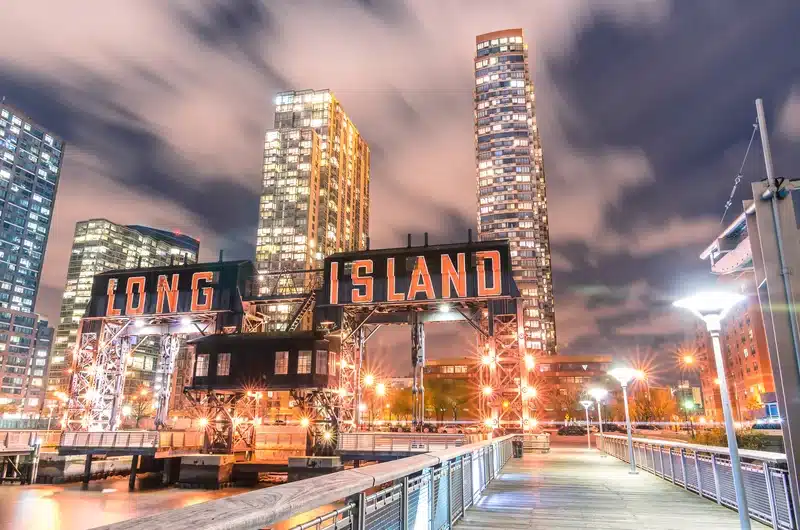
- Long Island City (Queens): The NY Waterway Ferry Terminal at 46th Ave and Center Blvd offers bus parking, and if you purchase ferry tickets, parking is often free or discounted. This is an option for groups coming in from Long Island. It offers quite a scenic entrance into Midtown Manhattan.
The outer boroughs offer much more logistical flexibility than Manhattan.
Brooklyn
Using Brooklyn as your disembarking point can be a wise move. Brooklyn is subway-rich and Manhattan-bound by design. The A / C / F / R / Q / 2 / 3 / 4 / 5 lines all run straight into Manhattan, and are frequent and predictable. Most of the stations for these lines are near bus staging zones. At most, your group will walk a couple of blocks to the subway station for the ride into Manhattan. The bus can then come into Manhattan only for your scheduled pick-up time.

Queens
Queens offers a great balance of space and access. The E / F / 7 / N / W / R lines run straight into Midtown and Times Square, and are frequent. The LIRR (Long Island Rail Road) can be faster for some itineraries, but has fewer stops and is more expensive.
Bronx
The Bronx feeds directly into Manhattan via the 4 / D / B / 1 lines that are fast and frequent. The rides times from the Bronx are probably shortest of all.


Staten Island
From Staten Island, groups can take the Staten Island Ferry. The ferry is simple and surprisingly effective, free, accommodates a large number of people and goes directly to lower Manhattan. Your bus can park near St. George terminal which is a short walk to the ferry. For downtown itineraries, this is an excellent option.
Charter Bus Logistics in Manhattan
Now for the “inside” approach.
The Three Rules of NYC Tour Bus Regulations
Before your bus enters the city, be sure your group and driver are aware of these three rules enforced by the NYC Department of Transportation (DOT):
- The Route Slip Requirement: Every charter bus operating in Manhattan must carry a “Route Slip.” This document describes your origin, destination, and the specific streets your driver intends to use. Our network drivers will know this, but it’s helpful for group leaders to have a copy of the itinerary handy.
- Anti-Idling Laws: To reduce emissions, NYC law prohibits buses from idling for more than three minutes. When temperatures drops below 40°F, limited idling is permitted, but only for the safety of passengers and the mechanical integrity of the bus.
- Designated Truck Routes: Large vehicles, including buses, must stay on designated truck routes when they can. Buses can only leave these routes at the intersection closest to their destination and must return to the truck route immediately after drop-off.
The Reality of Charter Bus Parking in NYC
There is no free-form parking for charter buses in New York City, even if a spot could be found. None. If a bus is stopped, it must be:
- Actively loading or unloading passengers or
- Parked in a designated, legal bus parking zone or
- Parked off-street in a private or municipal bus facility
Regarding designated parking zone locations and logistics:
- Location: Most authorized spots are located in Lower Manhattan (near Battery Park and the Lower East Side) and in the Theater District.
- Payment: NYC uses the ParkNYC app or on-street meters. Expect to pay approximately $20 per hour.
- Limits: Most metered spots have a 3-hour maximum. For longer stays, the bus will need to relocate to a long-term layover zone.
Parking at Iconic NYC Landmarks
- 9/11 Memorial & Museum: Buses must have a specific permit for access to the World Trade Center site. Drop-offs mostly occur on the east side of West Street between Barclay and Vesey Streets.
- The Theater District (Broadway): After dropping off near the theater, drivers often head to metered parking on the north side of Barclay Street or use layover zones on the far West Side (11th and 12th Avenues).
- Central Park & Museums: For the American Museum of Natural History or The Met, loading zones are available along Central Park West and 5th Avenue, but parking is scarce. Layover areas in the West 50s are available.
Permits and Required Documentation
NYC does not issue a single universal “charter bus permit,” but drivers must carry:
- Valid CDL
- Current vehicle registration
- Proof of insurance
- DOT and FMCSA compliance
Some venues and curb zones require advance coordination or local authorization. Metropolitan Shuttle manages this as part of trip planning when required.
Loading & Unloading Tips
Loading and unloading are the typical occasions for traffic citations. To keep your trip moving:
- Be Ready: Be sure your group is gathered at the designated pickup spot before the bus arrives.
- Avoid No-Go Zones: Buses should never stop in MTA bus stops, bike lanes, or crosswalks.
- Quick Turnaround: Use the “Quick Drop” or “Drop and Run” method. The driver should pull over, allow passengers to disembark safely and swiftly, and then move immediately to a staging area.
Charter buses may load and unload passengers at the curb only where signage permits bus stopping. These stops are all designed to be short-duration.
Key rules:
- Engines should be shut off whenever possible (NYC enforces anti-idling laws)
- Drivers must always remain with the vehicle
- Stops are for passenger movement only, not for waiting
- Blocking bike lanes, crosswalks, hydrants, or travel lanes is prohibited
Popular loading areas include:
- Major hotels
- Convention centers
- Designated curb zones near attractions
These locations are heavily monitored. Precision matters.
Anti-Idling Laws are Strictly Enforced
New York City enforces anti-idling laws aggressively.
Rules:
- No idling over 3 minutes (only 1 minute near schools)
- Applies to charter buses
- Violations result in fines
Drivers are expected to shut down engines when parked or waiting. Please understand that your driver will have to comply with these rules.
High-Risk Areas to Avoid
Certain locations are known enforcement traps:
- Midtown hotel corridors
- Times Square perimeter
- Broadway theater district
- Midtown East during business hours
Stopping in these zones without authorization almost guarantees a ticket.
Common Mistakes That Cost Money
These errors occur repeatedly:
- Assuming hazard lights make stopping legal
- Making a bus “wait just a few minutes”
- Misreading signage
- Relying on outdated parking advice
Planning a Charter Bus Trip in New York City
If you’re organizing group transportation in NYC, parking should be addressed before booking dates are finalized.
Metropolitan Shuttle will work with you in planning:
- Route planning
- Parking strategy
- Operator compliance
- Real-world execution
Talk to professionals who do this daily. Book your NYC charter bus with Metropolitan Shuttle, the nationwide charter bus service with deep NYC experience- roughly 25 years. One point of contact. No surprises.Contact us to plan your New York City charter bus transportation the right way. Call 929-298-7617!