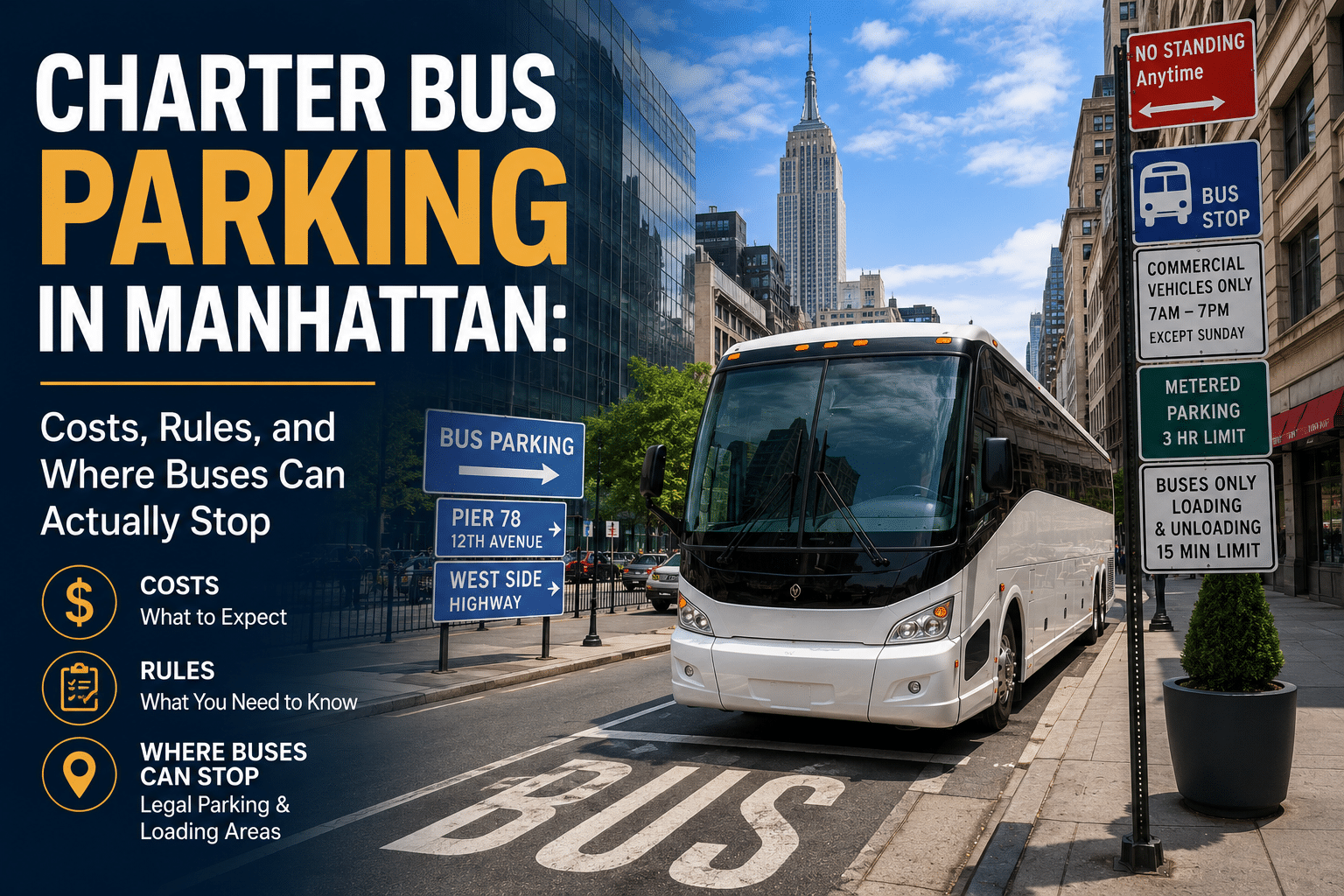

Where Can Charter Buses Park in NYC? Manhattan, Brooklyn & Airport Rules Explained
One of the most common questions event planners, schools, tour organizers, and corporate coordinators ask is simple: where can a NYC charter bus actually park?
Unlike most cities, buses in NYC cannot simply pull over and wait. The city regulates commercial vehicle loading zones, curb space, and staging areas very carefully. Without planning ahead, buses may need to circle blocks, delay pickups, or relocate to legal waiting areas. Understanding the rules in advance helps prevent late arrivals and confusion for passengers.
If you are organizing group transportation, knowing the difference between drop-off locations, loading zones, and long-term parking areas is essential.
Why NYC Has Strict Bus Parking Rules
New York City streets operate under heavy traffic volume, especially in Manhattan. Charter buses are larger than standard vehicles and require additional curb space to safely load and unload passengers. Because of this, the city restricts where buses can stop, how long they can wait, and when staging is permitted.
These regulations are designed to keep traffic moving and maintain pedestrian safety. Drivers must follow posted commercial vehicle signage, police instructions, and designated loading areas.
Manhattan Charter Bus Drop-Off Locations
In Manhattan, most charter buses are permitted to drop off passengers but not remain parked. A drop-off typically allows passengers to exit the vehicle safely before the bus relocates to a legal waiting location.
Common drop-off areas include hotel loading zones, designated bus lanes, and approved curbside commercial areas. However, after unloading, the bus must usually move to a staging location or legal parking area outside congested corridors.
Midtown Manhattan Rules
Midtown is the most restrictive area for buses because of traffic congestion. Buses are often required to unload quickly and leave immediately. Drivers cannot remain parked while groups attend events, restaurants, or shows.
For Broadway theaters, conferences, or corporate meetings, organizers typically schedule a specific pickup time so the bus can return once passengers are ready.
Brooklyn & Outer Borough Parking
Brooklyn, Queens, and other boroughs are generally more flexible than Manhattan. Many venues have larger curb access and some locations allow limited waiting periods depending on posted signage.
However, drivers still must follow commercial vehicle rules and avoid blocking traffic lanes, fire hydrants, or crosswalks. Planning pickup timing remains important to prevent delays.
Javits Center & Convention Staging
Large conventions often use designated staging areas. The Javits Center has organized group transportation zones where buses can load and unload attendees. Event coordinators usually schedule arrival windows to keep traffic flowing efficiently.
Airport Pickup Rules
Each airport operates differently:
JFK Airport: Commercial buses use specific terminal pickup areas and drivers monitor arrivals before entering pickup lanes.
LaGuardia Airport: Short-term loading zones are designated, and buses must follow terminal instructions for arrivals.
Newark Airport: Pickup locations are coordinated through commercial vehicle lanes and scheduled entry.
Because flights can be delayed, drivers often wait in staging lots until passengers are ready for pickup.
Where Buses Wait Between Trips
Since buses cannot stay curbside in busy areas, drivers typically relocate to legal parking or staging zones. These may be outside Manhattan or in designated commercial parking areas until pickup time.
Organizers usually provide a return pickup window so the driver can re-enter the area when passengers are ready.
Why Planning Matters
Without an organized pickup plan, groups may experience confusion, delayed departures, or missed schedules. Providing clear pickup instructions, realistic timing, and accurate passenger counts helps transportation run smoothly.
Advance coordination allows drivers to navigate traffic patterns and staging restrictions while keeping passengers safe and on time.
Final Thoughts
Charter bus parking in New York City is less about distance and more about logistics. Understanding drop-off zones, staging areas, and pickup timing helps ensure a smooth transportation experience.
With proper planning, group transportation in NYC can be reliable, organized, and efficient — even in the busiest parts of the city.